Nati Meir - Works

Nati Meir - Works

Nati Meir - Works

Material & Process

Material & Process

Material & Process

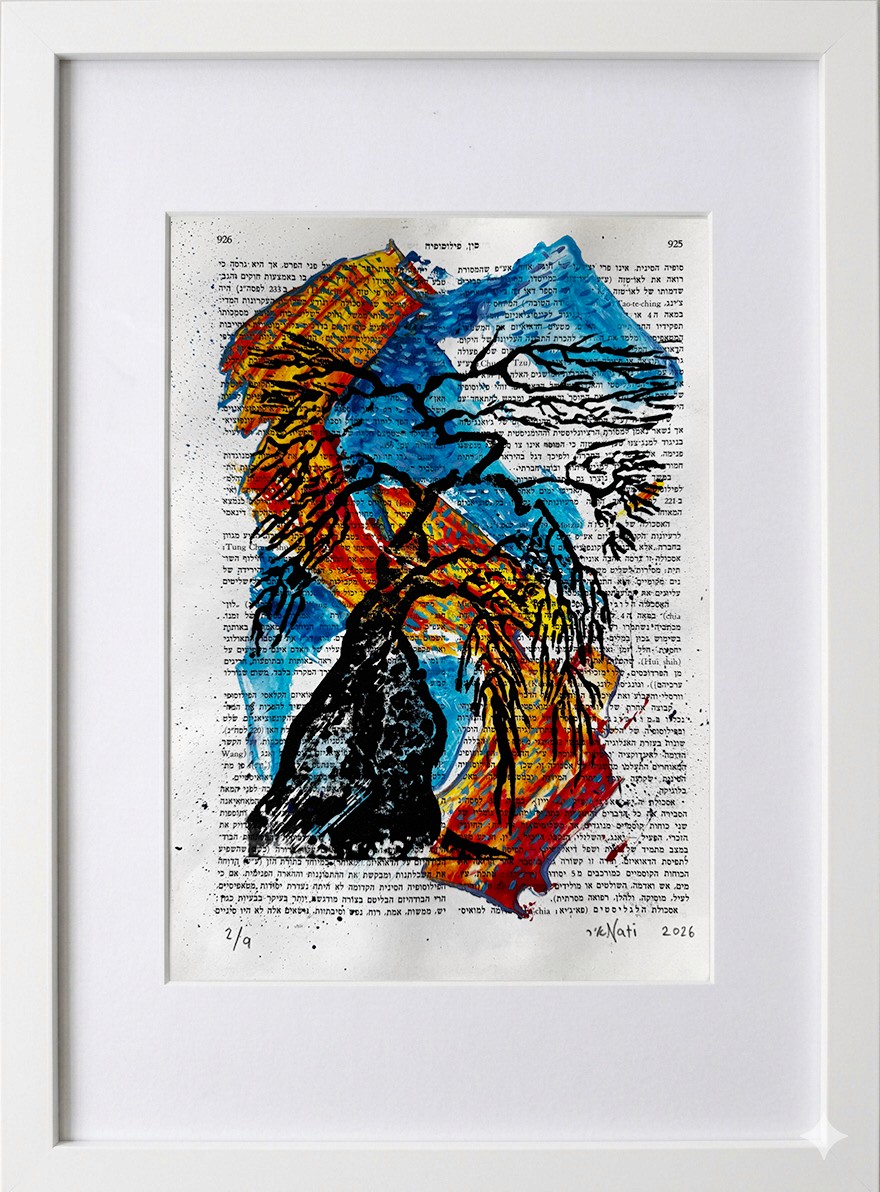
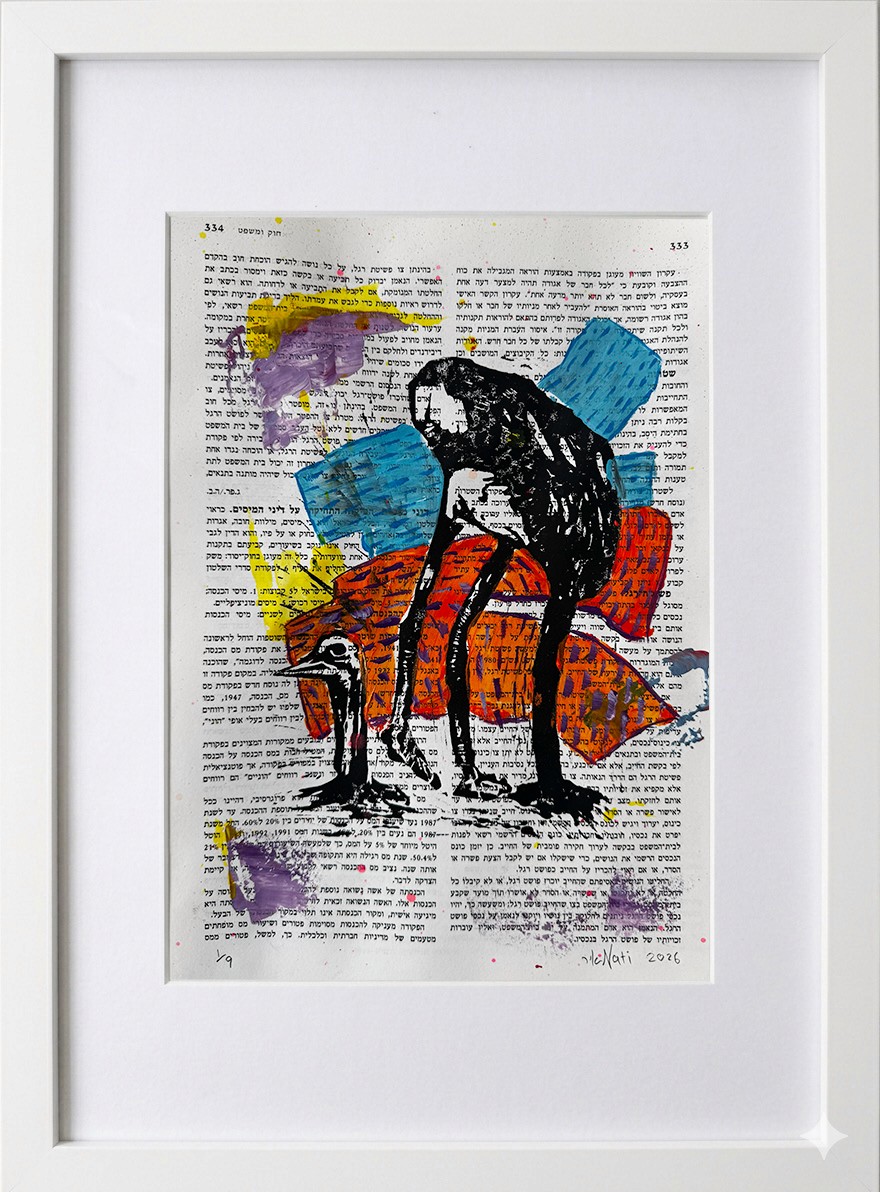
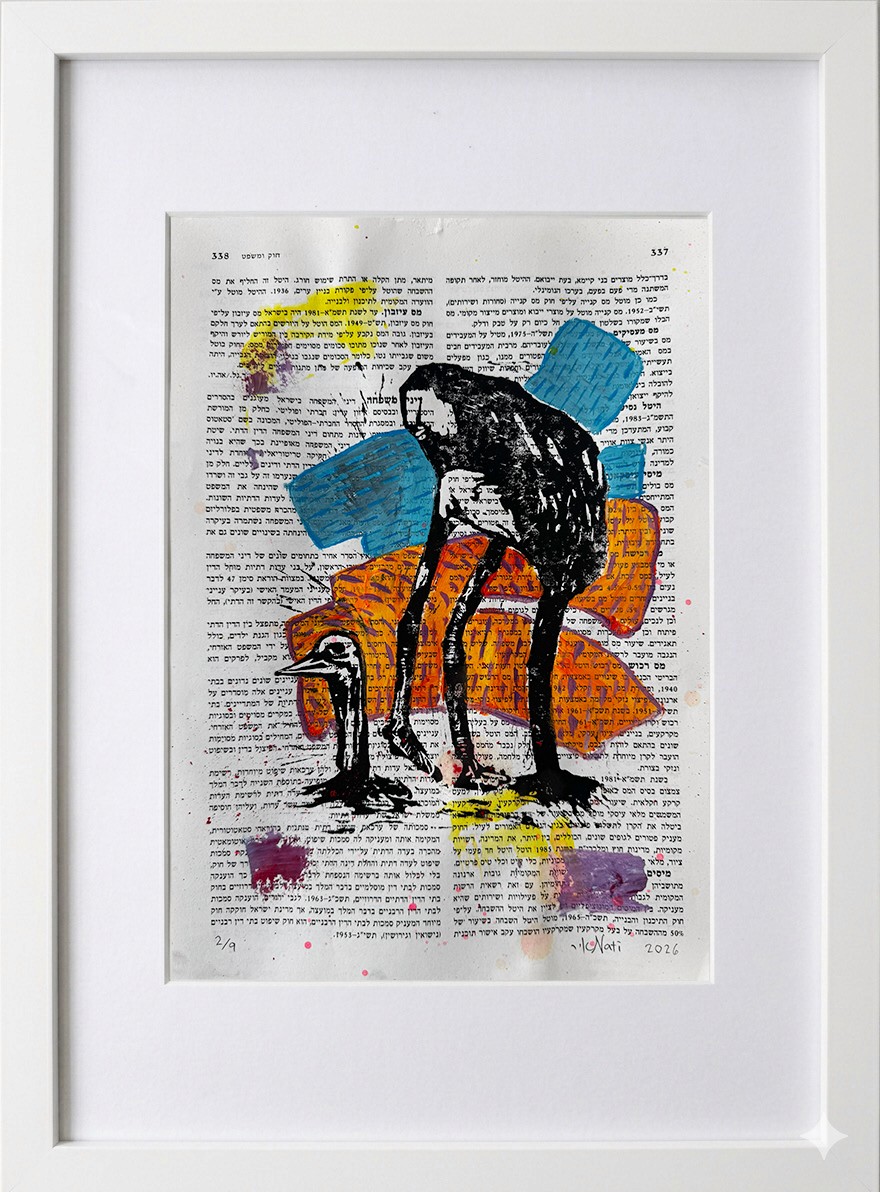
Rescued pages from the Encyclopaedia Hebraica become the ground for a dialogue between local soil, printed history, and personal memory. Nati collects clay soil, forms it into tiles, and engraves images that he prints by hand in black ink over acrylic. Dip-pen and brush drawing, finished with dashed lines reminiscent of stitching, explore fracture, survival, and reconstruction. The small-format editions use hand-carved linoleum blocks. Each impression is printed by hand and individually worked with acrylic, so every piece has its own character.

Rescued pages from the Encyclopaedia Hebraica become the ground for a dialogue between local soil, printed history, and personal memory. Nati collects clay soil, forms it into tiles, and engraves images that he prints by hand in black ink over acrylic. Dip-pen and brush drawing, finished with dashed lines reminiscent of stitching, explore fracture, survival, and reconstruction. The small-format editions use hand-carved linoleum blocks. Each impression is printed by hand and individually worked with acrylic, so every piece has its own character.

Rescued pages from the Encyclopaedia Hebraica become the ground for a dialogue between local soil, printed history, and personal memory. Nati collects clay soil, forms it into tiles, and engraves images that he prints by hand in black ink over acrylic. Dip-pen and brush drawing, finished with dashed lines reminiscent of stitching, explore fracture, survival, and reconstruction. The small-format editions use hand-carved linoleum blocks. Each impression is printed by hand and individually worked with acrylic, so every piece has its own character.

Ilan

Ilan

Ilan

2025 · Ink and acrylic on Hebrew Encyclopedia pages · 69 × 75 cm

2025 · Ink and acrylic on Hebrew Encyclopedia pages · 69 × 75 cm

"Whatever belongs to the tree is included: its form and its mechanics, its colours and its chemistry, its conversation with the elements and its conversation with the stars - all this in its entirety. The tree is no impression, no play of my imagination, no aspect of a mood; it confronts me bodily and has to deal with me as I must deal with it - only differently. One should not try to dilute the meaning of the relation: relation is reciprocity." Martin Buber
"Whatever belongs to the tree is included: its form and its mechanics, its colours and its chemistry...
Ilan — Nati Meir, 2025

Have You Buried?

Have You Buried?

Have You Buried?

2025 · Ink and acrylic on Hebrew Encyclopedia pages · 69 × 75 cm

2025 · Ink and acrylic on Hebrew Encyclopedia pages · 69 × 75 cm

"A new pride taught me mine ego, and that teach I unto men: no longer to thrust one’s head into the sand of celestial things, but to carry it freely, a terrestrial head, which giveth meaning to the earth! A new will teach I unto men: to choose that path which man hath followed blindly, and to approve of it—and no longer to slink aside from it, like the sick and perishing!" Friedrich Nietzsche
"A new pride taught me mine ego, and that teach I unto men: no longer to thrust one’s head into the ...

The Ship of Theseus

The Ship of Theseus

The Ship of Theseus

2026 · Clay-plate ink print and acrylic on Hebrew Encyclopedia pages · 69 × 75 cm

2026 · Clay-plate ink print and acrylic on Hebrew Encyclopedia pages · 69 × 75 cm

"The ship wherein Theseus and the youth of Athens returned had thirty oars, and was preserved by the Athenians down even to the time of Demetrius Phalereus, for they took away the old planks as they decayed, putting in new and stronger timber in their place, insomuch that this ship became a standing example among the philosophers, for the logical question of things that grow; one side holding that the ship remained the same, and the other contending that it was not the same." Plutarch
"The ship wherein Theseus and the youth of Athens returned had thirty oars, and was preserved by the...

The Lens of Roy

The Lens of Roy

The Lens of Roy

2026 · Ink and acrylic on Hebrew Encyclopedia pages · 69 × 75 cm

2026 · Ink and acrylic on Hebrew Encyclopedia pages · 69 × 75 cm

"I understood that unto such a torment The carnal malefactors were condemned, Who reason subjugate to appetite. And as the wings of starlings bear them on In the cold season in large band and full, So doth that blast the spirits maledict; It hither, thither, downward, upward, drives them; No hope doth comfort them for evermore, Not of repose, but even of lesser pain." Dante Alighieri
"I understood that unto such a torment The carnal malefactors were condemned, Who reason subjugate t...

Burden 1/3

Burden 1/3

Burden 1/3

2026 · Clay-plate ink print and acrylic · 69 × 75 cm · Edition of 3

2026 · Clay-plate ink print and acrylic · 69 × 75 cm · Edition of 3

"Modern man does not experience himself as a part of nature but as an outside force destined to dominate and conquer it. He even talks of a battle with nature, forgetting that, if he won the battle, he would find himself on the losing side." E. F. Schumacher
"Modern man does not experience himself as a part of nature but as an outside force destined to domi...

Ziran (Self-Growing) 1/3

Ziran (Self-Growing) 1/3

Ziran (Self-Growing) 1/3

2026 · Clay-plate ink print and acrylic on Hebrew Encyclopedia pages · 69 × 75 cm · Edition of 3

2026 · Clay-plate ink print and acrylic on Hebrew Encyclopedia pages · 69 × 75 cm · Edition of 3
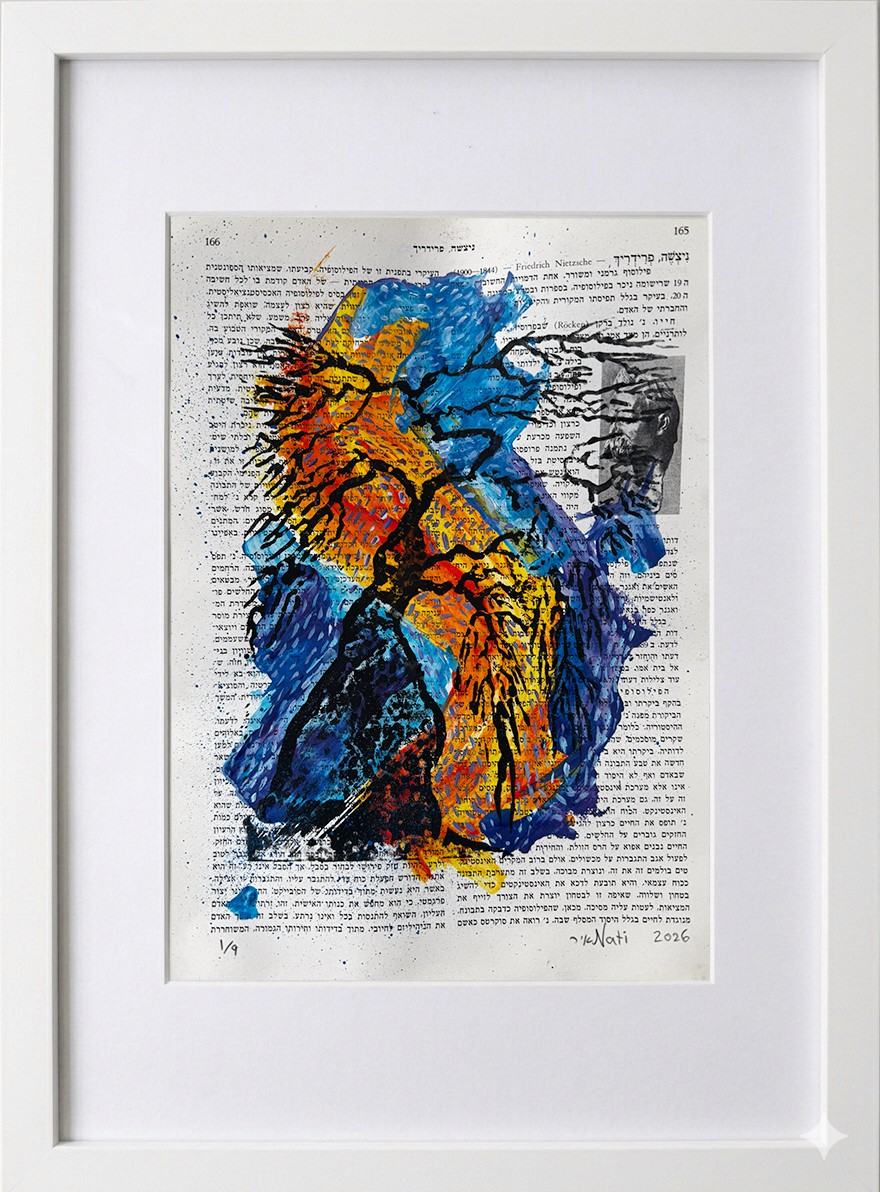
"I understood that unto such a torment The carnal malefactors were condemned, Who reason subjugate to appetite. And as the wings of starlings bear them on In the cold season in large band and full, So doth that blast the spirits maledict; It hither, thither, downward, upward, drives them; No hope doth comfort them for evermore, Not of repose, but even of lesser pain." Dante Alighieri
"I understood that unto such a torment The carnal malefactors were condemned, Who reason subjugate t...
ImageImageImageImageImageImage